Security and Governance Engineered Into Every Client We Serve.
Every Junkies Coder solution is built with security, governance, and compliance from day one ready for any market, audit, or enterprise review.
Scroll


How We Engineer Compliance Into Every Program
Compliance is a continuous engineering discipline at Junkies Coder, applied across every sprint, every architecture decision, and every production release, so your platform arrives audit-ready, regulation-aligned, and production-hardened from the very first deployment.
Global Regulatory Coverage
We build for regulated markets across North America, Europe, the Middle East and Asia-Pacific, covering GDPR, HIPAA, PCI DSS, SOC 2, ISO 27001, PDPL, PDPA and sector-specific standards. Compliance obligations are mapped at scoping stage so every architecture decision accounts for the markets your product serves from day one.
Industry Specific Standards
Regulated industries require domain-specific frameworks. Healthcare receives HIPAA and HITRUST alignment. Automotive receives ISO 26262 and ISO 21434. Fintech receives PCI DSS and FCA or RBI regulatory alignment. Every engagement applies the precise standards governing your industry, delivering audit-ready software that satisfies regulators and protects every user.
Security by Design
Security architecture is defined at system design stage and carried through every sprint to production. Every program includes threat modelling, data classification, role-based access control, AES-256 encryption, full audit logging and a documented incident response plan, with SAST, DAST and dependency scanning integrated into every CI/CD pipeline.
Global frameworks engineered into client programs
200+
SOLUTIONS DELIVERED
From SOC 2 Type II and ISO 27001 to HIPAA, PCI DSS, GDPR, and WCAG, our engineering teams have delivered production-grade compliance architecture across regulated industries in healthcare, fintech, automotive, and enterprise SaaS.
Frameworks & Standards We Engineer Against
Every framework listed below represents active engineering capability, architecture patterns, control implementations, and regulatory alignment delivered in production environments for enterprise clients. Not credentials. Proof.



40+
Regulated industry programs shipped to production
We have engineered and deployed over 40 enterprise-grade solutions across highly regulated sectors, including finance, healthcare, and government. Our battle-tested methodologies ensure every deployment meets strict operational and regulatory benchmarks from day one, mitigating risk while accelerating your time-to-market.
100%
Programs delivered with documented security architecture
Security is embedded directly into our engineering DNA. Every system we deliver is accompanied by comprehensive, audit-ready architecture documentation. This provides complete technical transparency and defensibility for your internal governance teams and external regulatory audits.
6
Global regions covered under our compliance practice
Our engineering practices span six major global jurisdictions, ensuring your platform adheres to complex international data protection laws (including GDPR, CCPA, and HIPAA). We build robust, scalable architectures that seamlessly adapt to localized legal requirements, protecting your business on a global scale.
Regulatory Coverage Across Every Market We Serve
Compliance obligations vary significantly across geographies. We map the precise regulatory frameworks governing your target markets at the scoping stage, ensuring your platform launches fully aligned across every region it serves.
European Union & UK
↓

Platforms serving EU and UK markets operate under the strictest data protection and digital infrastructure regulations in the world. We architect every product for full alignment before market entry.
Data Protection: GDPR, UK GDPR
Digital Infrastructure: NIS2 Directive
Financial Services: DORA, FCA Compliance
AI Governance: EU AI Act
Voices of Trust: From Vision to Verified Delivery
Listen to the industry leaders and technical founders who rely on our engineering teams to build secure, scalable, and fully compliant software architectures. Their real-world success stories validate our commitment to uncompromising quality and transparent delivery
Giviz: Manage & Recall Gifts
Flutter, My SQL, Node JS.
Where Every Regulation Becomes an Engineering Commitment
Every Junkies Coder solution is built with security, governance, and compliance from day one ready for any market, audit, or enterprise review.
Compliance Engineering Across Every Regulated Industry
Every industry we serve carries distinct compliance obligations. We engineer the precise frameworks, controls, and audit documentation that each sector demands, not generic security checklists applied uniformly across every project.

Healthcare & Digital Health

Fintech & Financial Services

Enterprise SaaS & Cloud Platforms

Automotive & Connected Vehicles

AgriTech & Food Supply Chain

Education & EdTech
We engineer HIPAA Security Rule-aligned safeguards including PHI encryption, tamper-evident audit logging, session controls, and BAA-compliant data processing architecture. International deployments additionally implement GDPR health data special category protections and regional data sovereignty requirements.
Core compliance alignment:
• HIPAA
• HITECH
• GDPR (Health)
• ISO 27001
• SOC 2
• HITRUST CSF
• NIST 800-53
• NIST CSF
• ISO 27799
• FDA 21 CFR Part 11
• COBIT
• PCI DSS (for payments)
• ISO 22301
• CSA CCM
• CCPA
• EN 13606
• ISO 9001
• FISMA
• ISO 31000
• ISO 13485
Accessibility Compliance Built Into Every Interface
Digital accessibility is a legal obligation across the United States, European Union, United Kingdom, Canada, and Australia. We engineer WCAG 2.1 AA compliance into every user interface we deliver, ensuring your platform is legally accessible, commercially inclusive, and usable by the widest possible audience across every device and assistive technology environment.
WCAG 2.1 AA Conformance
We build interfaces that meet all Level AA success criteria under WCAG 2.1, covering perceivable content with sufficient color contrast and text alternatives, operable navigation with full keyboard accessibility and focus management, understandable content with consistent interaction patterns, and robust markup that works reliably with screen readers, voice control systems, and other assistive technologies across every major browser and operating system.
ADA & Section 508 Compliance
For clients serving US markets, particularly in healthcare, government, financial services, and education, we engineer interfaces that satisfy Americans with Disabilities Act digital accessibility requirements and Section 508 federal accessibility standards. Our accessibility implementation is documented with conformance reports that support legal defensibility in enterprise procurement reviews and regulatory audit scenarios.
EN 301 549 European Accessibility Standard
For platforms deployed in European Union markets, we implement accessibility controls aligned with EN 301 549, the harmonized European standard for ICT accessibility that incorporates WCAG 2.1 AA requirements alongside additional criteria for non-web software, documentation, and two-way voice communication. This positions your platform for compliance with the European Accessibility Act requirements that apply to digital products and services from 2025 onwards.
Accessibility Audit & Remediation
For existing platforms with accessibility compliance gaps, we conduct structured accessibility audits using both automated scanning and manual expert review with assistive technology testing. Every audit produces a prioritized remediation roadmap with WCAG success criteria references, severity classifications, and implementation guidance that your development team can act on immediately or commission Junkies Coder to resolve on your behalf.
Compliance Programs We Have Delivered
Selected examples of compliance-engineered programs delivered by Junkies Coder across regulated industries, healthcare, fintech, automotive, and enterprise SaaS.
SourceVehicle — Cross-Border Compliance Architecture for B2B Automotive Export Platform
The Challenge
SourceVehicle operated across Dubai, Nigeria, Kazakhstan, GCC and Africa — each market carrying distinct export documentation requirements, customs regulations, and data governance obligations. A single compliance gap in any jurisdiction risked halting live transactions and exposing the platform to regulatory liability across multiple sovereign markets simultaneously.
How We Helped
We architected a documentation and compliance management layer handling export record workflows, multi-market regulatory requirements, and transaction integrity across all active jurisdictions. Role-based access controls, data encryption, and audit-trail infrastructure were engineered from the first sprint with automated security checks in CI/CD pipelines maintaining compliance posture across every deployment.
The Impact
- SourceVehicle launched as the Middle East's first B2B automotive export marketplace serving 10+ countries with zero post-launch compliance remediation. Consistent repeat business from international buyers validated that a regulation-aligned trade environment directly drives commercial trust at scale.
Compliance Is Not a Checkbox. It Is a Competitive Advantage.
Junkies Coder delivers certified, auditable compliance from day one turning it into your biggest deal-winning advantage.
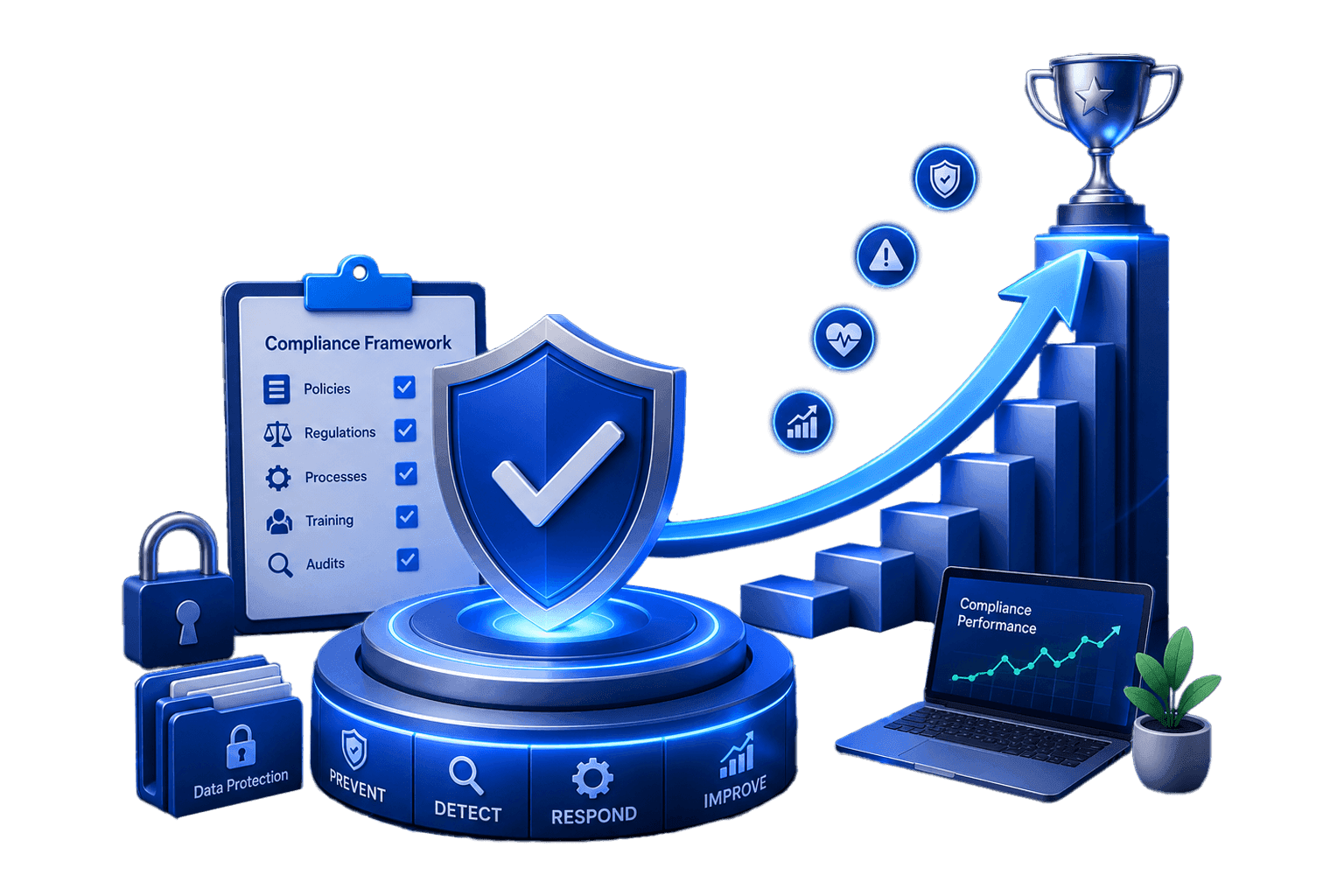
How We Deliver Compliance-Engineered Programs
A structured, sprint-integrated compliance delivery process that ensures regulatory alignment is never a post-development remediation exercise, it is a continuous engineering discipline applied from the first discovery session through every production release.

Compliance Scope Mapping
We begin every engagement by mapping the precise regulatory frameworks governing your target markets, user data types, industry sector, and enterprise client requirements. This produces a compliance scope document that defines every standard, framework, and certification your platform must satisfy before launch, eliminating mid-project compliance surprises.

Security Architecture Design
Compliance requirements are translated into specific architecture decisions during system design, data model structure, encryption strategy, access control hierarchy, audit logging schema, network segmentation, and API security patterns are all defined with regulatory alignment documented before a single line of production code is written.

Sprint-Level Control Implementation
Each development sprint delivers specific compliance controls alongside functional features. Security requirements are tracked as first-class sprint items with defined acceptance criteria, not deferred to a compliance sprint at the end of the program. Every control is implemented, reviewed, and documented as part of the standard delivery process.

Automated Security Testing in CI/CD
Automated SAST, DAST, dependency vulnerability scanning, and compliance policy checks are integrated into the CI/CD pipeline from sprint one. Security defects are identified and remediated in the same sprint they are introduced, preventing the accumulation of compliance debt that makes pre-launch audit remediation expensive and time-consuming.

Third-Party Penetration Testing
Before every production release we commission independent penetration testing by certified security professionals against the specific threat models relevant to your platform's compliance framework, OWASP Top 10 for web applications, HIPAA-specific attack scenarios for healthcare platforms, and PCI DSS penetration testing requirements for cardholder data environments. All findings are remediated before go-live.

Audit Documentation & Ongoing Compliance
We deliver comprehensive compliance documentation packages including security policies, control matrices, risk assessments, penetration test reports, and evidence packages formatted for the specific audit processes of your target certifications. Post-launch, we provide continuous compliance monitoring, annual re-assessment support, and regulatory update implementation as frameworks evolve.

Regulatory Change Management
Compliance frameworks evolve continuously. We monitor regulatory updates across every jurisdiction and framework active in your platform's compliance scope — implementing control updates, policy amendments, and architecture adjustments before regulatory deadlines. Your platform stays aligned without emergency remediation cycles when frameworks publish new requirements.

Enterprise Procurement & Audit Support
When your enterprise clients issue security questionnaires or your platform enters a formal certification audit, our compliance team provides direct support — completing vendor security assessments, preparing auditor evidence packages, responding to technical due diligence requests, and attending audit sessions as your compliance engineering partner. You never face a procurement review or audit cycle alone.

Frequently Asked questions
Our active compliance engineering capabilities cover HIPAA and HITECH for healthcare platforms, PCI DSS Levels 1 through 4 for payment card environments, SOC 2 Type I and Type II for cloud and SaaS platforms, ISO 27001 for information security management systems, GDPR and UK GDPR for platforms serving European data subjects, CCPA and CPRA for California consumer privacy, ISO 26262 and ISO 21434 for automotive safety and cybersecurity programs, UNECE WP.29 for connected vehicle OTA governance, FSMA and GLOBALG.A.P. for food supply chain traceability, WCAG 2.1 AA for digital accessibility, and regional frameworks including India PDPB, UAE PDPL, Singapore PDPA, and Australia Privacy Act.
Compliance is treated as a continuous engineering discipline at Junkies Coder, not a post-development audit exercise. We begin every engagement with a compliance scope mapping session that defines every regulatory framework applicable to your platform. Security architecture decisions are made with compliance requirements documented before development begins. Compliance controls are delivered as first-class sprint items alongside functional features. Automated security testing including SAST, DAST, and dependency scanning is integrated into the CI/CD pipeline from sprint one. Third-party penetration testing is completed before every production release. The result is a platform that arrives audit-ready without a separate compliance remediation phase.
Yes. Many healthcare and digital health platforms require simultaneous HIPAA and GDPR compliance — serving US patients whose PHI is governed by HIPAA while also handling data from European users whose health information qualifies as a special category under GDPR Article 9. We architect unified compliance frameworks that satisfy both standards simultaneously using a common controls approach, implementing PHI encryption and audit logging that satisfies HIPAA Security Rule requirements while also satisfying GDPR's technical and organizational measures obligations. This eliminates the duplication cost of treating each framework as a separate compliance program.
SOC 2 Type I assesses whether your security controls are suitably designed at a specific point in time — it is a design-level audit that can typically be completed within 2 to 3 months of control implementation. SOC 2 Type II assesses whether those controls are operating effectively over an observation period, typically 6 to 12 months, producing the audit report that most enterprise clients require before approving vendor onboarding. Junkies Coder engineers the control environment required for both, typically recommending that clients pursue Type I certification first to validate control design before entering the Type II observation period, with the complete Type II report as the commercial objective.
ISO 27001 certification timeline depends on the size and complexity of your information security scope and the maturity of your existing security controls. For organizations starting from limited baseline controls, the typical timeline from gap assessment through Stage 1 and Stage 2 certification audits is 9 to 14 months. Organizations with existing security programs and documented controls can often achieve certification in 6 to 9 months. Junkies Coder accelerates this timeline by implementing controls as part of sprint delivery rather than as a separate compliance workstream, and by preparing audit documentation concurrently with control implementation rather than after development is complete.
Yes. Third-party penetration testing is a standard component of our compliance-engineered delivery process for all regulated platform programs. We commission independent penetration testing by certified security professionals, CREST-certified or OSCP-qualified depending on the regulatory requirement, against threat models specific to your platform's compliance framework. HIPAA-regulated platforms receive healthcare-specific attack scenario testing. PCI DSS environments receive testing aligned with PCI DSS Requirement 11 specifications. Web application platforms receive OWASP Top 10-based testing. All penetration test findings are remediated before production go-live and the final report is included in your compliance documentation package.
Yes. Compliance remediation for existing platforms is a common engagement type for us. We begin with a structured gap assessment that evaluates your current architecture, data flows, access controls, encryption implementation, audit logging, and development processes against the specific requirements of your target compliance framework. The gap assessment produces a prioritized remediation roadmap with implementation effort estimates and risk severity classifications. We then implement the remediation controls as a structured engineering program, preparing the complete audit documentation package in parallel. For platforms with significant compliance debt, we typically phase remediation to address the highest-risk gaps first while maintaining platform operational continuity.
Our compliance delivery packages include all documentation required to support formal certification audits and enterprise procurement security reviews. Standard documentation deliverables include information security policies aligned to the applicable framework, risk assessment and risk treatment plan documentation, control matrix mapping platform controls to specific framework requirements, system architecture diagrams with data flow documentation showing PHI or cardholder data scope, penetration test reports with remediation evidence, vulnerability management records, access control and key management documentation, incident response procedures, and business continuity plans. For SOC 2 programs we additionally prepare the complete management assertion and control description documentation required for auditor review.
Scroll for more